

AHA Basic Life Support (BLS) Certification | American Heart Association. Save lives with AHA Basic Life Support (BLS) Certification from the American Heart Association. Get easy online training now!
<meta name="description" content="Learn about the AHA Basic Life Support (BLS) Certification | American Heart Association, course details, benefits, enrollment steps, & more.” />
What is AHA Basic Life Support (BLS) Certification | American Heart Association?
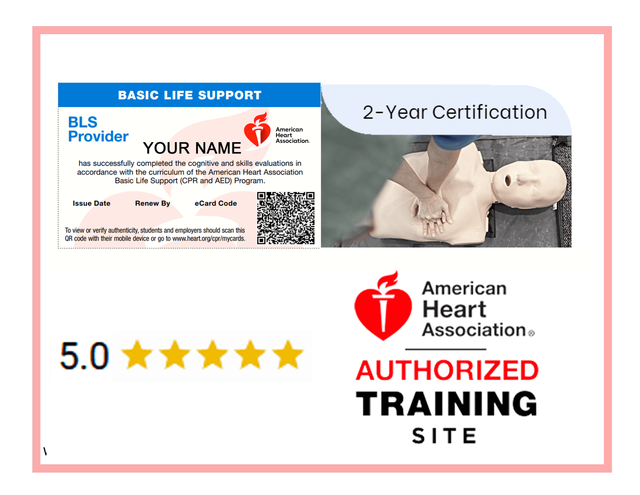
The AHA Basic Life Support (BLS) Certification | American Heart Association is a globally recognized credential that validates the holder’s ability to perform high-quality cardiopulmonary resuscitation (CPR) & use an automated external defibrillator (AED) effectively. This certification covers life-saving techniques for adult, child, & infant emergencies, combining hands-on skills practice with scenario-based learning. Healthcare professionals, first responders, & community members benefit from this program by gaining confidence in emergency response. Successful completion involves checking responsiveness, ensuring airway openness, administering chest compressions, providing rescue breaths, & operating an AED. The curriculum aligns with current science guidelines & emphasizes teamwork, communication, & safety. Passing a written exam & practical skills demonstration awards the certification card, valid for two years, making it an essential qualification for anyone interested in emergency support.
| Component | Description |
|---|---|
| CPR Techniques | Chest compressions, ventilation ratios, & hand positioning. |
| AED Use | Applying pads, securing rhythm analysis, & delivering shocks. |
| Infant & Child | Altered techniques for smaller bodies & rescue breaths. |
| Team Dynamics | Leadership, role assignment, & clear communication. |
Key Benefits of AHA Basic Life Support (BLS) Certification | American Heart Association
Achieving the AHA Basic Life Support (BLS) Certification | American Heart Association unlocks numerous professional & personal advantages. Beyond compliance with healthcare regulations, it builds confidence in crisis situations & enhances employability across hospitals, clinics, & emergency services. By mastering high-quality CPR & AED use, certified individuals contribute to higher survival rates & improved patient outcomes. This program also fosters teamwork skills, enabling participants to integrate smoothly into code teams or emergency response units. Continuous updates from the American Heart Association ensure that knowledge remains current. Here are some of the most compelling benefits:
-
Enhanced professional credibility in medical settings
-
Improved readiness for real-life emergencies
-
Compliance with regulatory & employer requirements
-
Hands-on practice with mannequins & AED trainers
-
Access to updated guidelines from AHA experts
-
Credential recognized by national & international bodies
Course Content & Structure for AHA Basic Life Support (BLS) Certification | American Heart Association
The curriculum for the AHA Basic Life Support (BLS) Certification | American Heart Association is designed to provide both theoretical knowledge & practical skills. Training begins with a brief review of anatomy & emergency response principles, followed by detailed modules on adult, child, & infant CPR, use of AED devices, & relief of choking. Students rotate through interactive stations led by certified instructors who offer real-time feedback. The final segment simulates high-pressure scenarios requiring quick decision-making in teams. To successfully complete the program, candidates must pass a multiple-choice exam & demonstrate competency in skills testing. The overall structure balances lectures, hands-on drills, & scenario-based group exercises over a half-day or blended format.
| Module | Content | Duration |
|---|---|---|
| Introduction | Program objectives & guidelines. | 15 minutes |
| Adult CPR | Compression-to-ventilation ratio. | 30 minutes |
| Child & Infant CPR | Adjusted technique & depth. | 25 minutes |
| AED & Choking | Shock delivery & relief methods. | 20 minutes |
| Evaluation | Written test & hands-on checkoff. | 30 minutes |
Enrollment & Registration Process
Registering for the AHA Basic Life Support (BLS) Certification | American Heart Association course is quick & straightforward. First, search for accredited training centers through the AHA website or partner institutions. Next, select a date, time, & delivery format classroom-only or blended learning with online modules As well as in-person skills testing. Confirm access to prerequisite materials provided digitally. Complete the registration form by entering personal details, professional affiliation, & emergency contact information. Finally, process payment securely online via credit card or purchase order. Upon successful registration, you’ll receive confirmation emails, login credentials for any eLearning portions, & details about location or necessary equipment. If you have questions, certified training centers offer customer support to guide you through each stage.
-
Locate an AHA-authorized training site
-
Choose class format & schedule
-
Complete online registration form
-
Submit payment securely
-
Receive confirmation & study guides
-
Attend sessions & skills check
Eligibility Criteria & Prerequisites
To enroll in the AHA Basic Life Support (BLS) Certification | American Heart Association program, participants must meet basic prerequisites that ensure a smooth learning experience. There is no formal healthcare background required, but candidates should be able to communicate effectively in English & follow verbal instructions. A valid photo ID is mandatory for in-person sessions. For blended courses, internet access & a device capable of streaming video lectures are necessary. Physical readiness to perform chest compressions & practice rescue breaths on a mannequin is expected. Any medical limitations should be disclosed in advance to certify instructor staff. Once criteria are confirmed, registrants receive pre-course materials that summarize key concepts to review before attending the practical workshop.
| Requirement | Details |
|---|---|
| Age | Minimum 14 years old |
| Language | Proficiency in English |
| Equipment | Mannequin & AED trainer |
| ID Verification | Government-issued photo ID |
| Health Status | Fit for hands-on practice |
Tips for Successful Completion
Avoid common pitfalls & boost your confidence by applying these proven strategies while preparing for the AHA Basic Life Support (BLS) Certification | American Heart Association exam. Incorporate focused study habits, leverage group practice, & prioritize skill drills that reinforce correct compression depth & rate. Use video tutorials to visualize techniques, & seek clarification from instructors on challenging steps. Manage your time effectively on exam day & stay composed during skills testing. Regular short practice sessions in the days leading up to class help maintain muscle memory. By following these steps, you’ll feel prepared & capable when facing both the written evaluation & live scenario assessments.
-
Review the official BLS Provider manual prior to class
-
Practice chest compressions with a metronome
-
Watch demonstration videos to refine techniques
-
Form study groups for peer feedback
-
Ask instructors to clarify any doubts immediately
-
Simulate test scenarios under timed conditions
Recertification & Renewal Guidelines
Maintaining current AHA Basic Life Support (BLS) Certification | American Heart Association status is crucial for healthcare roles & first responders. Renewal occurs every two years & typically involves an updated skills test, review of new guidelines, & a brief written assessment. Many training centers offer blended options, combining online refresher modules with an in-person skills session of 30 to 45 minutes. Participants who complete the renewal receive a new certification card with the extended expiration date. Advanced notice reminders are sent by email to ensure no lapses in coverage. Staying current reinforces confidence in emergency response & aligns practitioners with the most recent science-based recommendations.
| Step | Action |
|---|---|
| Renewal Interval | Every 2 years |
| Online Review | Complete eLearning module |
| Skills Practice | Hands-on compressions & breaths |
| Assessment | Written quiz & practical checkoff |
| Certification | New card issued on success |
Personal Experience with AHA Basic Life Support (BLS) Certification | American Heart Association
I recently completed the AHA Basic Life Support (BLS) Certification | American Heart Association & found the hands-on drills both challenging & rewarding. During practical exercises, I practiced maintaining proper compression depth & timing under an instructor’s watchful eye, boosting my confidence. The scenario simulations were realistic, encouraging me to communicate clearly with teammates while responding to sudden cardiac arrest situations. After passing the exam & skills test, I felt equipped to act decisively in emergencies. This experience reinforced the importance of regular practice & staying updated with current guidelines. I now carry my certification card & am ready to assist in any critical event.
“The AHA Basic Life Support (BLS) Certification | American Heart Association provides the essential skills every responder needs to save a life.”
– Prof. Rosa Yundt
Frequently Asked Questions
How long is the BLS certification valid?
The AHA Basic Life Support (BLS) Certification | American Heart Association card remains active for two years from the date of issuance. Recertification is required every 24 months to keep the credential current. Renewal reminders are sent via email in advance to ensure there’s adequate time to complete the process.
Can I renew online or do I need to attend in person?
Renewal can be completed using a blended approach: you finish the eLearning module online & then attend a short in-person skills testing session led by an authorized AHA instructor. This method ensures both cognitive update & hands-on competency.
What materials will I receive upon registration?
Upon registering, you’ll get access to digital pre-course materials, including the BLS Provider manual, instructional videos, & practice checklists. Printed handbooks may also be available at the training site for reference during your session.
Who should obtain BLS certification?
Healthcare professionals such as nurses, doctors, & EMTs, as well as first responders, lifeguards, & any individuals interested in emergency care, should earn the AHA Basic Life Support (BLS) Certification | American Heart Association to ensure preparedness during cardiac arrest & other life-threatening situations.
Conclusion
The AHA Basic Life Support (BLS) Certification | American Heart Association stands as a critical credential for anyone involved in patient care or community safety. By mastering CPR techniques, AED usage, & team-based response, certified individuals boost survival chances in emergencies. The structured curriculum balances theory & practice, while flexible delivery formats accommodate busy schedules. Registration is simple, & prerequisites are minimal, making it accessible to a wide audience. Renewal every two years maintains proficiency & aligns responders with the latest guidelines. Whether you’re a seasoned practitioner or new to healthcare, investing in this certification ensures you’re ready to act effectively when seconds count.

