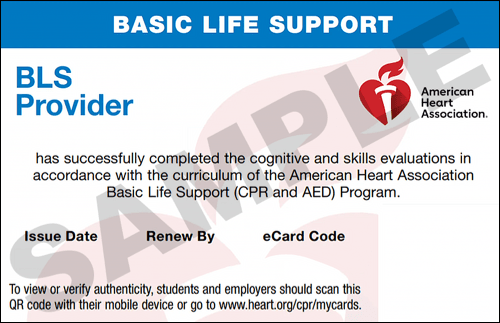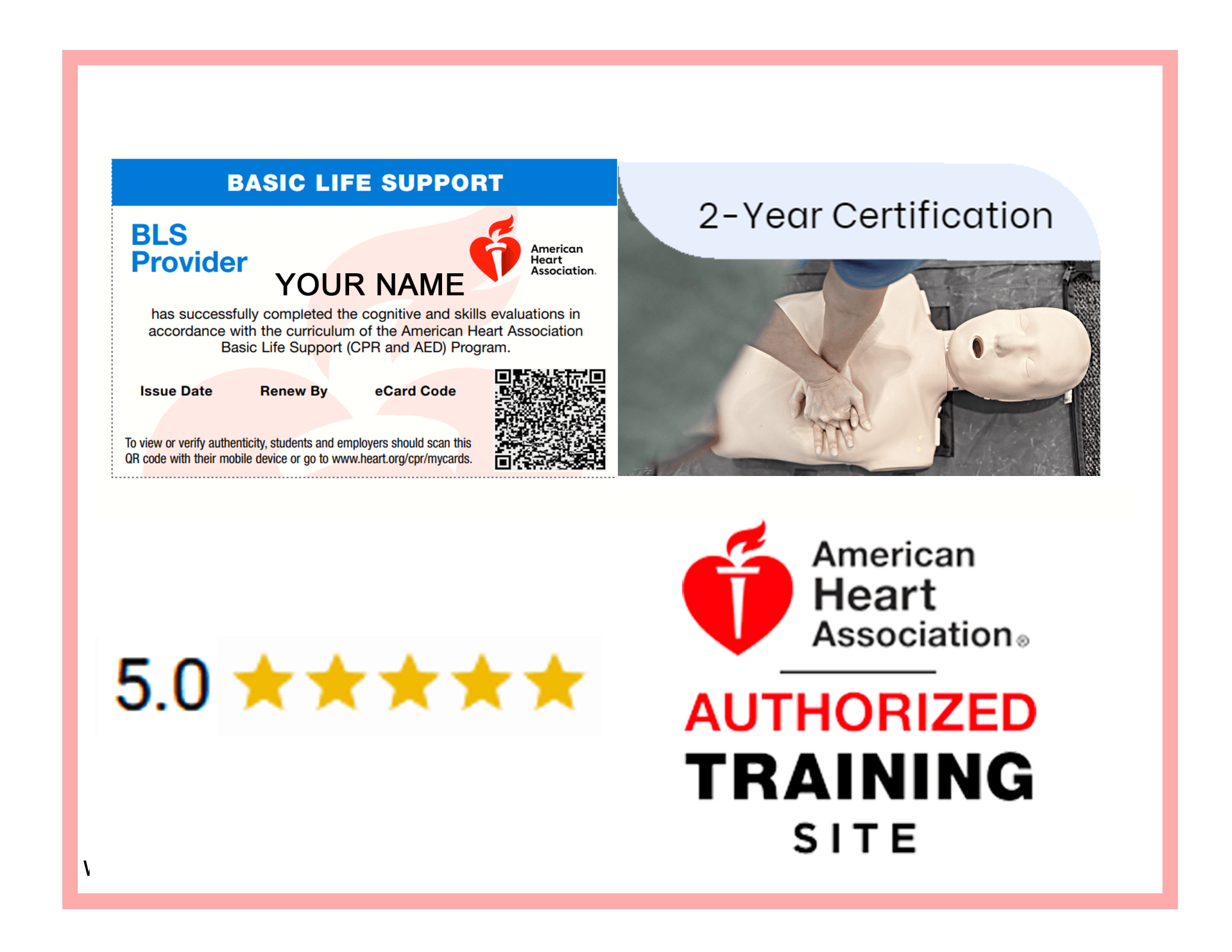
Basic Life Support (BLS) Certification | American Heart Association. Get your Basic Life Support (BLS) Certification from the American Heart Association Act now.

<meta name="description" content="Learn about the Basic Life Support (BLS) Certification | American Heart Association course structure, eligibility, practice guidance & more in this comprehensive guide.”>
Importance of Basic Life Support (BLS) Certification | American Heart Association
Securing a Basic Life Support (BLS) Certification | American Heart Association demonstrates readiness to deliver critical intervention during cardiac emergencies, choking incidents, or respiratory arrest. Employers in healthcare settings, community response teams, & educational institutions value this credential because it verifies core competencies in CPR, AED usage, & team relief techniques. This certification builds confidence, improves response time, & fosters a culture of safety. By following standardized protocols, certified individuals reduce hesitation & support patient outcomes with greater efficiency. Whether in a hospital corridor or at a sporting event, the skills you acquire through this certification prepare you to act decisively whenever seconds count.
-
Demonstrates life-saving competence
-
Meets employer & regulatory requirements
-
Enhances team-based emergency response
-
Reduces potential liability risks
-
Boosts personal confidence in crises
Course Structure & Content
The Basic Life Support (BLS) Certification | American Heart Association curriculum covers adult & pediatric CPR, Automated External Defibrillator (AED) use, & relief of foreign-body airway obstruction. Instructors guide learners through a combination of didactic instruction, demonstration, & hands-on practice. Participants review current resuscitation science & algorithms, then apply those principles to realistic scenarios. Each module builds on the previous one, ensuring that students develop muscle memory & decision-making skills. Detailed feedback is provided throughout skill stations to sharpen technique. The final evaluation confirms that each student can perform high-quality chest compressions, effective ventilation, & safe AED operation under time pressure.
| Module | Description |
|---|---|
| Adult CPR | Chest compressions & rescue breaths for adults |
| Pediatric CPR | Techniques adapted for children & infants |
| AED Use | Safe & effective defibrillator operation |
| Choking Relief | Heimlich maneuver & back blows |
| Team Dynamics | Coordinating multiple rescuers |
Who Should Enroll for Basic Life Support (BLS) Certification | American Heart Association
A broad range of professionals benefit from earning a Basic Life Support (BLS) Certification | American Heart Association. While healthcare providers such as nurses, emergency medical technicians, & physicians require this credential to comply with facility policies, other groups can gain confidence in emergency response. Athletic coaches, lifeguards, childcare workers, & first responders find that these skills enhance safety in their communities. Even nonmedical staff who operate in high-traffic public areas can step forward when emergencies arise. By enrolling, participants ensure readiness to act effectively & reduce delays while waiting for advanced care providers.
-
Healthcare professionals (nurses, EMTs, doctors)
-
Fitness trainers & sports coaches
-
School & childcare staff
-
Lifeguards & first responders
-
Workplace safety officers
-
Public event volunteers
Hands-On Practice & Skills Assessment
Practical application is at the heart of any Basic Life Support (BLS) Certification | American Heart Association course. Participants rotate through multiple skill stations where they perform chest compressions, rescue breaths, AED deployment, & choking relief. Instructors observe technique, offer guidance, & correct hand placement, depth of compressions, & ventilation volume. Learners repeat drills until instructors confirm proficiency. This real-time feedback loop ensures students internalize proper rhythm & coordination. The final hands-on exam challenges each individual to complete a full sequence under supervised conditions to earn full certification & a completion card.
| Skill | Assessment Method |
|---|---|
| Chest compressions | Instructor observation |
| Rescue breaths | Manikin feedback device |
| AED application | Simulated defibrillator |
| Choking relief | Peer & instructor review |
| Team scenario | Timed group drill |
I still recall the first time I mastered chest compression depth during a BLS class. I was nervous, but repeated practice under the watchful eye of an instructor helped me gain confidence. Performing compressions at 100–120 per minute felt natural by the end of the session. That moment made me certain this certification would be a cornerstone of my readiness to help anyone facing a life-threatening event.
Renewal & Recertification Process
A valid Basic Life Support (BLS) Certification | American Heart Association card remains effective for two years. Before expiration, learners must complete a renewal course that revisits core skills. Renewal takes less time than initial training because candidates demonstrate retained competencies rather than learning from scratch. During recertification, instructors confirm that participants still perform high-quality compressions, ventilations, & AED operations. Most centers offer open enrollment for renewal, making scheduling flexible. After successful evaluation, candidates receive an updated card with a new expiration date, ensuring continued compliance with safety protocols.
“Basic life support skills can mean the difference between life & death.” – Erich Lowe
-
Two-year certification validity
-
Shortened renewal sessions
-
Emphasis on skill checks
-
Flexible class schedules
-
Immediate issuance of new card
-
No written test required
Online vs In-Person Options
Prospective students can choose between blended learning & fully in-person classes. Online options often include video demonstrations, interactive quizzes, & remote skills verification. This format suits busy professionals who prefer completing cognitive modules at home. In-person sessions, Be that as it may, provide direct instructor feedback & group drills for muscle memory development. Some facilities offer hybrid experiences: online theory with a single-day skill session. Evaluating your schedule, learning style, & access to training centers helps you pick the option that matches your needs.
| Format | Pros | Cons |
|---|---|---|
| Fully Online | Flexible schedule | Limited hands-on time |
| In-Person | Direct instructor guidance | Fixed timing |
| Blended | Best of both methods | Requires technology access |
| Group Workshop | Peer feedback | Class size may vary |
Career Benefits of Basic Life Support (BLS) Certification | American Heart Association
Holding a Basic Life Support (BLS) Certification | American Heart Association can open doors for professional advancement. Healthcare employers often list this credential as a prerequisite for hiring or promotion. It also enhances resumes for roles in emergency preparedness, public safety, & community outreach. Volunteers in non-profit health organizations increase their impact by standing ready to assist in urgent scenarios. Even outside typical medical settings, this certification signals commitment to safety & responsibility, building trust with supervisors, coworkers, & clients.
-
Meets many job requirements
-
Boosts professional credibility
-
Enhances community roles
-
Supports career growth
-
Strengthens leadership skills
-
Shows commitment to safety
Tips for Passing the Basic Life Support (BLS) Certification | American Heart Association Exam
To approach the certification exam with confidence, review key techniques & policies before test day. Practice compressions on a manikin & time yourself to maintain proper rate. Watch video demos to refine hand positioning & ventilation volume. Read the latest AHA guidelines on compression-to-ventilation ratios. During the exam, stay calm, listen to each instruction, & confirm steps before you begin. Bring your certification card, photo ID, & any printed materials if required. A composed mindset & deliberate preparation will help you demonstrate mastery on exam day.
| Tip | Action |
|---|---|
| Practice on manikins | Maintain correct depth & rate |
| Review AHA guidelines | Focus on 30:2 ratio |
| Watch demonstration videos | Note hand placement |
| Simulate exam timing | Build muscle memory |
| Prepare required documents | Bring ID & card |
FAQ
What is the validity period of Basic Life Support (BLS) Certification | American Heart Association?
The certification is valid for two years from the date of issue. Recertification is required before the expiration to maintain active status & compliance.
Can I complete the entire course online without any in-person sessions?
Fully online options cover theory, video demonstrations, & quizzes. Be that as it may, most providers require an in-person skills evaluation to confirm technique before issuing certification.
Do I need any prerequisites before enrolling in a BLS course?
No formal prerequisites are mandated. Students should be able to perform physical activities like chest compressions. Basic literacy in English is helpful for understanding course materials.
Conclusion
Earning Basic Life Support (BLS) Certification | American Heart Association equips individuals with proven techniques to manage life-threatening emergencies in diverse settings. Through structured modules, hands-on drills, & a final evaluation, participants gain confidence in high-quality chest compressions, rescue breaths, AED application, & airway obstruction relief. Whether you pursue blended learning or attend in-person workshops, the certification process is streamlined for skill retention & professional growth. Recertification every two years ensures your knowledge remains current. By earning this credential, you join a network of responders ready to protect lives when urgent care is needed most.